Out now
Book release
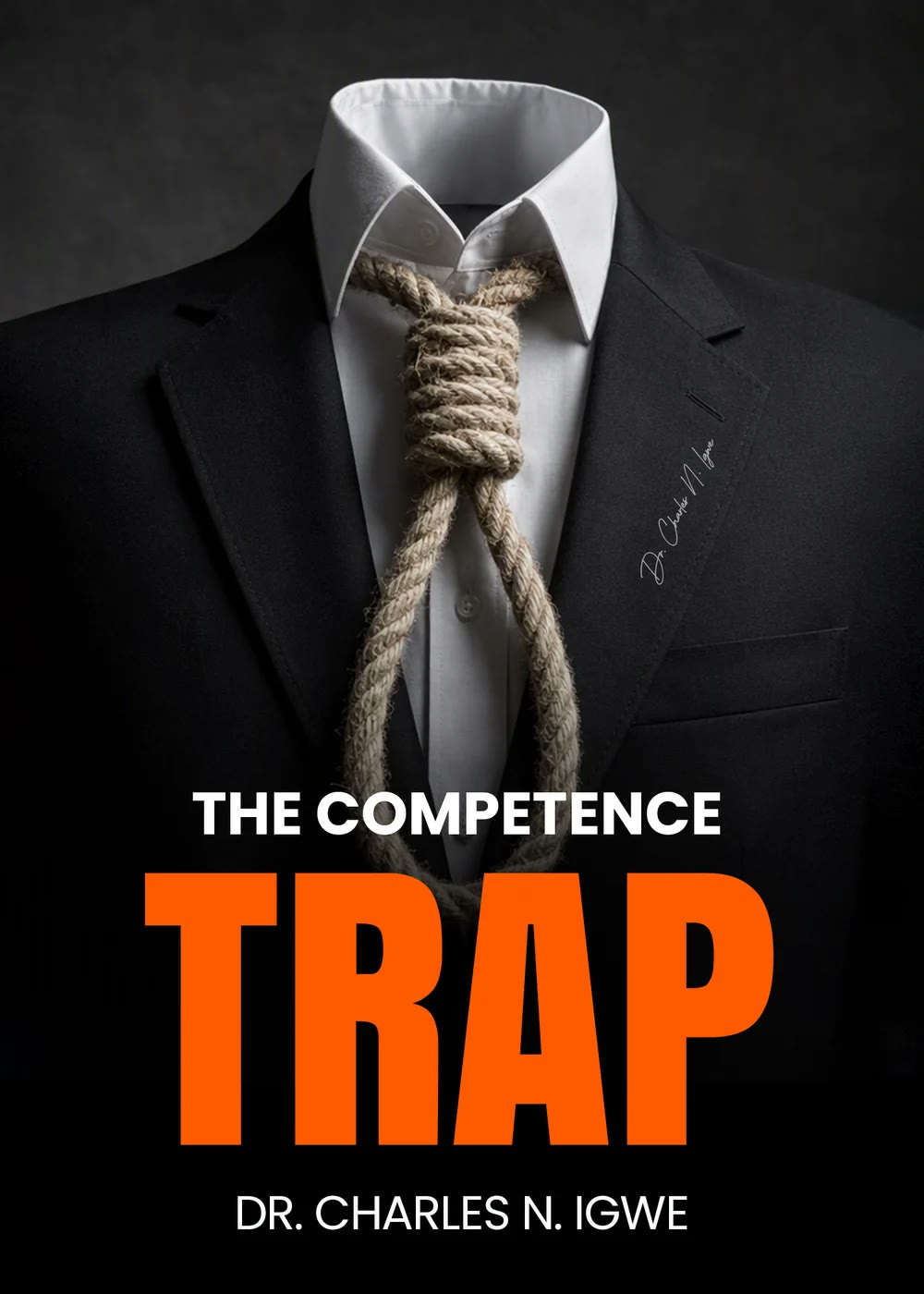
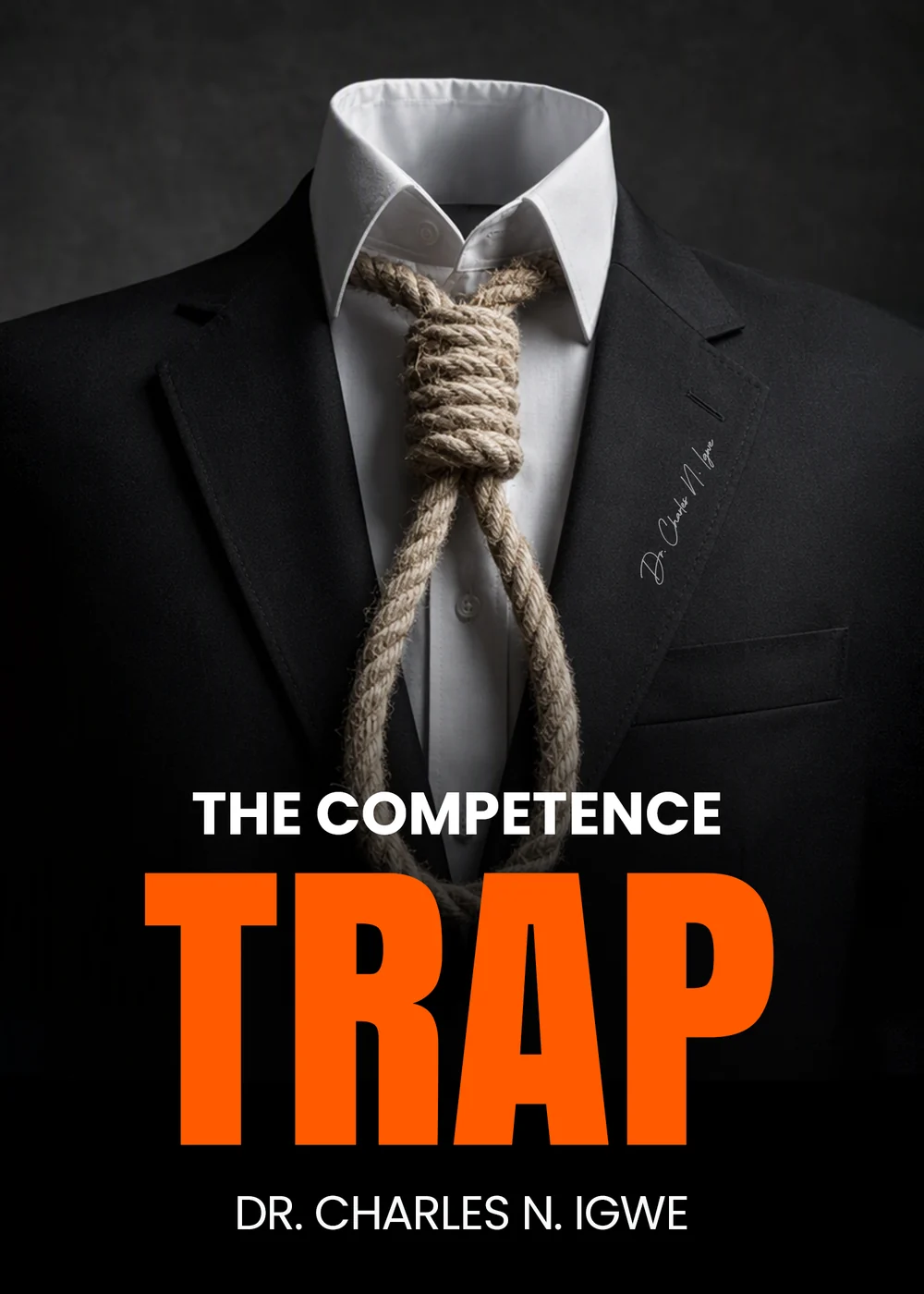
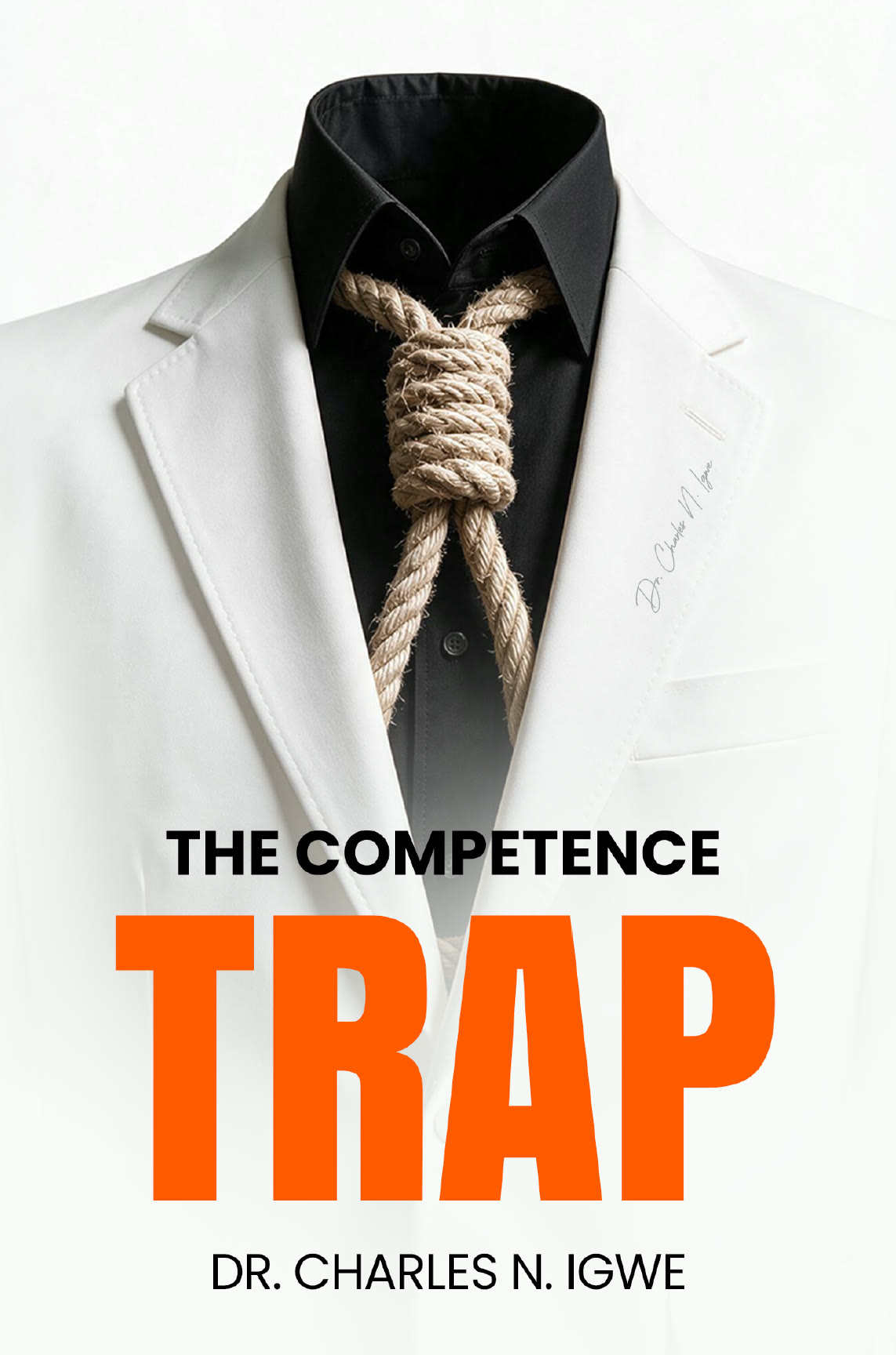
The Competence Trap
Competence Is Not the Trap. Becoming Useful Without Becoming Powerful Is.
A book for people whose work has become necessary but whose power has not grown in proportion, trusted with difficult outcomes, relied upon in ambiguity, and praised for carrying what others avoid.
The central argument
One collision between merit and system logic.
The competence trap rarely announces itself as failure. It often arrives as praise, useful work, respectable opportunities, or responsibility that appears to signal progress.
This is not a book against competence, service, humility, credentials, or contribution. It is a book against allowing those strengths to become unexamined instruments of containment.
“The same reliability that proves their range can quietly become the reason the system keeps them where they are most useful.”
Who should read this
Written for people whose work has outgrown their power.
Four readers the book was written for. If one of them is you, start there.
-
For high performers who carry more than their title says
You're the one trusted with the hard outcomes and called the moment things turn unclear, yet your authority hasn't moved an inch with your work. The Competence Trap names why being indispensable to the work can quietly keep you from power over it, and what it takes to change that without becoming political or performative.
“Quiet excellence becomes containment when your labor is consistently visible, but your judgment is not.”
-
For the credential collector
Another certification, another course, another proof point, and the seat you actually want still hasn't opened. This book asks the harder question underneath the effort: are you building what the next move requires, or reaching for one more qualification to postpone being seen?
“Effort without directional movement can trap a person inside a cycle of proving that never quite becomes power.”
-
For emerging and established leaders whose merit didn't travel
You arrived with real experience and discovered that merit alone doesn't travel. The book names the system logic you're working inside: the quiet rules that reward reliability and withhold authority. It shows how to make your judgment, not just your credentials, the thing people encounter.
“An institution can depend on a person's competence while remaining unwilling to imagine that competence as authority.”
-
For managers, executives, HR and organisations
Your most dependable people may be the ones quietly holding everything in place, and the ones you're most likely to lose. The book shows what the competence trap costs an organisation, and how to turn your best performers into real leaders before their strengths become the reason they stall, burn out, or leave.
“The system learns the wrong lesson from your competence: because you keep absorbing the strain, the strain begins to look tolerable.”
Praise
Praise for The Competence Trap
The Competence Trap puts language around an experience many accomplished professionals recognize but struggle to name: being highly valued does not always mean being positioned to lead. Charles offers a thoughtful examination of competence, visibility, influence, and institutional life, and a powerful reminder that leadership requires more than simply becoming indispensable.
When a capable professional stops rising, most books diagnose the person and prescribe behavior change. Charles Igwe diagnoses the institution instead: competence that the institution never converted into shared capacity. That turns your containment into a design defect you can raise out loud without accusing anyone.
The Competence Trap challenges one of the most persistent assumptions in professional life: that being great at the work is enough. Charles does an excellent job showing how competence, visibility, relationships, and power intersect, while never losing sight of the human being behind the title. This is an important read for anyone navigating leadership and growth.
Inside the book
4 parts. 12 chapters.
Each chapter asks one question. Read it from beginning to end, or start with the question you are living now.
Part 1 · The Collision
Diagnosing the systemic glitch.
Not an argument against hard work, but the hidden bargain many internalize: "If I carry enough, the system will carry me." That bargain holds in simple environments; it fractures in complex ones.
-
Chapter 01 The Comfortable Lie of Meritocracy
Core question: What happens when you build a career believing merit decides who succeeds, only to discover the system rewards something else?
Merit isn't false. It's incomplete, and the day it stops explaining your outcomes, you'll interrogate yourself before you ever interrogate the system.
Read more about The Comfortable Lie of Meritocracy
Merit carries force because it promises dignity without dependence: that you can earn standing cleanly, without needing access, familiarity, or endorsement. When that promise breaks, the instinct is rarely to question the system. It's to ask what credential you're missing, what flaw you failed to detect.
-
Chapter 02 Accountability Without Power
Core question: How do you lead when you are held accountable for outcomes you don't control?
You're accountable for outcomes you didn't design. Carry that asymmetry well enough, and it stops looking urgent to anyone but you.
Read more about Accountability Without Power
Institutions often separate decision rights from execution capacity: strategy stays concentrated, implementation gets dispersed, and the people closest to consequences absorb the risk for choices made elsewhere. Carry that burden well enough, and your composure becomes the evidence that the arrangement is workable.
-
Chapter 03 Identity Lag and the Titles That Trail Us
Core question: What happens when who you are outgrows the title you hold?
Your language, decisions, and range have moved past the title still being used to explain you, and no one else has noticed yet.
Read more about Identity Lag and the Titles That Trail Us
A title can begin as proof and harden into a frame. You can still be admired, still be trusted, and still be quietly compressed by a label your own evolution has already outgrown.
Part 2 · The Tactical Pivot
Examining the habits that stopped producing movement.
It begins where effort can no longer work alone: at the end of effort's illusion that it can keep working alone.
-
Chapter 04 The Credential Mirage
Core question: Why does accumulating proof rarely produce more trust?
"You have more education than what you are coming to do. You can teach here." One sentence that reveals proof was never the real obstacle.
Read more about The Credential Mirage
George Al Haddad arrived in Canada with real engineering experience and registered for another credential, the responsible next step. Then someone told him plainly what changed everything. The obstacle was never proof. It was diagnosis.
-
Chapter 05 The Invisibility Tax
Core question: What is the real cost of staying quiet?
Nearly five hundred résumés. Silence back. Rejection at least tells you that you were seen. Silence doesn't even do that.
Read more about The Invisibility Tax
Rejection at least acknowledges your arrival. It tells you that you were seen, considered, weighed, and set aside. Silence leaves you arguing with air. Your credentials remain real, your effort remains real, and none of it becomes encounter.
-
Chapter 06 The Chameleon Frequency
Core question: Can you be visible without becoming performative?
By the time the words leave your mouth, half their force is already spent managing how the room will read you for saying them.
Read more about The Chameleon Frequency
For someone raised to believe worth should emerge through labor rather than announcement, self-promotion doesn't feel unfamiliar. It feels like inverting a moral order that once protected you.
Part 3 · Power Literacy in Complex Systems
Understanding how institutional influence works.
-
Chapter 07 Visibility and Credibility
Core question: What makes a room begin trusting your judgment before formal authority arrives?
Your recommendation gets used. The decision gets better because of you. And somehow, the room still doesn't know it was you.
Read more about Visibility and Credibility
A contribution can be used repeatedly without teaching the institution where the judgment behind it lives. The recommendation gets absorbed, the analysis helps, the path gets clearer, and the room still doesn't build institutional memory around you.
-
Chapter 08 Networks as Infrastructure
Core question: Why is progress rarely a solo act?
Real movement happens before the meeting starts. Networks aren't favors you cash in. They're the infrastructure decisions already travel through.
Read more about Networks as Infrastructure
Most advice shrinks networking into favors you collect and cash in later. The real function is different: certain readings of a situation already carry more momentum than others before the first official sentence of a meeting has even landed.
-
Chapter 09 Contribution Before Authority
Core question: What can contribution prove before authority arrives to name it?
You're waiting for a title to feel safe solving the problem. The organization is waiting to see you solve it before it grants the title.
Read more about Contribution Before Authority
That's the paradox authority creates for people taught that restraint is respect. We wait for permission to feel safe. The organization is often waiting for proof before it feels safe granting permission.
Part 4 · The Ownership Mindset
Integration and legacy: what recognition now requires of you.
-
Chapter 10 Leadership in Unfair Systems
Core question: How do you lead inside a system that will not become fair on your schedule?
What you call persistence, in an unfair system, often looks a lot more like loyal misdiagnosis.
Read more about Leadership in Unfair Systems
Acceptance sounds like surrender to anyone whose identity was built on the belief that disciplined effort should matter proportionately. Refusing to see the structure as it actually behaves just keeps you arguing with a version of the world that no longer exists.
-
Chapter 11 The Repositioning Edge
Core question: When stability itself becomes the ceiling, what has to be redesigned?
Prudence was supposed to protect your credibility. At some point, it quietly starts defending the cage instead.
Read more about The Repositioning Edge
The permission reflex feels intelligent, not timid, built from real lessons about timing and credibility. But repeated adaptation eventually acquires the dignity of principle long after the conditions that produced it should have been renegotiated.
-
Chapter 12 The Work After the Applause
Core question: What responsibility remains when influence has been earned, but the system has not at its core changed?
The most dangerous lie success tells you isn't that you made it. It's that you made it alone.
Read more about The Work After the Applause
The truth is that the path was always held, briefly, by other people's time, language, access, and willingness to translate your value across a boundary. The work after the applause is deciding whether your visibility will sanitize the old rules or help write better ones.
About the author
Dr. Charles N. Igwe
Dr. Charles N. Igwe is a portfolio and program manager, educator, keynote speaker and leadership strategist. He is Portfolio and Program Manager in the Hydrogen and Tritium Technologies Directorate at Canadian Nuclear Laboratories, where he leads multi-disciplinary programs in highly regulated, high-complexity environments. He speaks internationally on leadership, project delivery, trust, governance, inclusion and navigating uncertainty, is a member of the Harvard Business Review Advisory Council, and founded CI3, a leadership and advisory platform.
- Education
- PhD, Construction Project Management
- Executive MBA, Strategic Leadership
- MSc, Engineering Project Management
- BEng, Civil Engineering
- Certifications
- PMI PfMP, PgMP, PMP, PMI-RMP and PMI-ACP
- GPM-b
- MSP Practitioner
- Lean Six Sigma Black Belt
- LEED Green Associate
- Current roles
- Portfolio and Program Manager, Canadian Nuclear Laboratories
- Instructor, Schulich Executive Education and Algonquin College
- Founder, CI3 Inc.
- Host, the #FiresideChat series
- Delegate, Global Alliance for Artificial Intelligence
- Advisor, Ontario Digital Agency
This book began with a professional sentence I could not forget. The question sounded practical. It was also diagnostic. It revealed how easily an institution can depend on a person's competence while remaining unable, or unwilling, to imagine that competence as authority.
This is not a book against competence, service, humility, credentials, or contribution. It is a book against allowing those strengths to become unexamined instruments of containment.
“For everyone whose work has been trusted further than their authority was ever allowed to travel.”

Free book signing
Book signing
Book signing at Carleton
Meet Dr. Charles N. Igwe, hear the ideas behind the book, and have your copy signed. Free and open to everyone.
- Date
- Venue
- The Atrium, Nicol Building, Carleton University
- City
- Ottawa, Ontario
- Cost
- Free
RSVP for the signing
Free. Tell us how many are coming so we have enough chairs and copies.
Where to buy
Get your copy.
CI3 does not sell the book directly. Each link opens the bookstore's own page.
Formats
- eBook CA$12.99
- Paperback CA$29.99 at Amazon.ca · US$29.99 at Amazon.com
- Hardcover US$39.99 at Amazon.com Priced in USD
Bookstores
- Buy on Amazon.ca eBook
- Buy on Amazon.com eBook
- Buy on Amazon.ca Paperback
- Buy on Amazon.com Paperback
- Buy on Amazon.com Hardcover
- Buy on Amazon.ca Hardcover
Order at any bookstore, worldwide
The book is distributed worldwide through Ingram, so any bookstore or library can order it. Give them the ISBN for your format.
- eBook
- ISBN 9781065821922
- Paperback
- ISBN 9781065821915
- Hardcover
- ISBN 9781065821908
Ordering for a team, class or event?
For 10 or more copies, tell us what you need and CI3 will reply with options. This is an enquiry, not an order, and no payment is taken here.
Media and press
For journalists, hosts and event organisers
Interviews, reviews, podcast appearances and excerpts. Write to hello@ci3pro.ca or use the form, and we will reply within two working days.
Press kit
The author's bio is above. Files are free to use with credit to CI3.